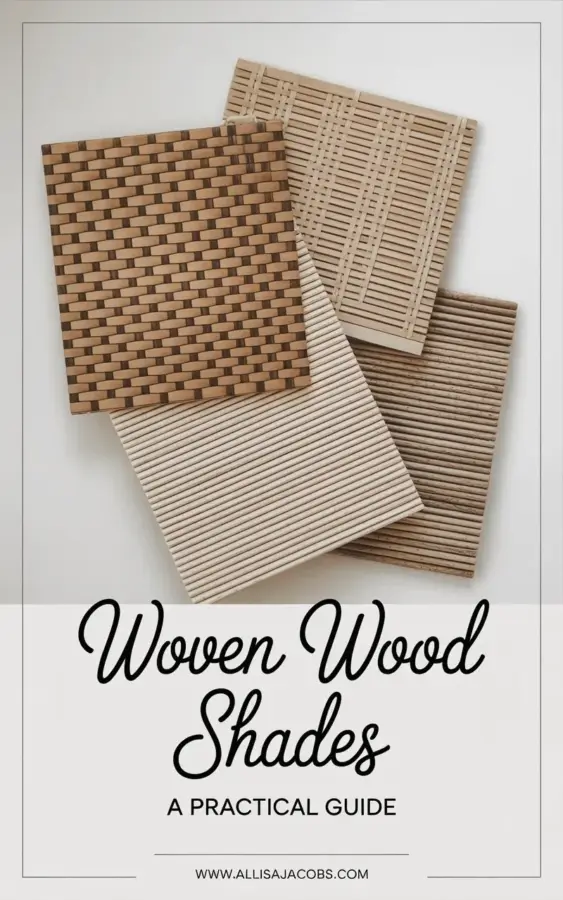
There is a specific moment, usually on a Saturday afternoon in a big box home store, when you reach for a stack of woven wood shades and immediately recoil from the price tag. Custom natural textures feel like a luxury line item. But buying samples first changes the entire game. Comparing the swatches in your own light, on your own floor, against your own walls is the only way to make a smart choice for your windows without blowing your budget.
The last time I ordered a batch of samples, I spread them out on the kitchen counter and just stared at them for a good twenty minutes. The four that arrived made me realize how much the weave direction changes the whole mood of a room. It is honestly the most fun you can have for zero dollars, and it prevents you from making a costly mistake with full-size blinds.
Why Ordering Woven Wood Shade Samples Is the Smartest First Step
Look, a thumbnail on a website is not enough information to hang a window treatment on. The digital representation gets the color roughly right, but it completely flattens the depth of the natural fibers. When you hold a sample in your hand and tilt it toward a window, you suddenly see how the reed reflects light differently than the jute or the bamboo.
Shipping costs are usually the only hurdle, and many companies waive them completely. You can order a full set of swatches for the price of a latte, which is a steal compared to the cost of a custom blind that you might hate once it is installed. I have made that mistake with a different product, and the return shipping was brutal.
Here is the thing: samples also let you check the opacity. You can hold one up to a lamp and see exactly how much light will bleed through during the day. That is data you cannot get from a product video.
Horizontal Stripes vs. Vertical Stripes (The Photo Breakdown)
The photo that inspired this particular roundup shows four distinct looks, and it is worth breaking down exactly what they tell us. The two samples on the left side use a tighter weave. The top left has a horizontal woven pattern in a warm, almost coffee-like brown. The bottom left is where it gets interesting, it uses a vertical striped pattern in a light beige that has a bit of a linen feel to the eye.
Now, those two bottom samples on the right are the real workhorses of the group. The bottom right features a similar vertical striped texture but in a slightly darker shade, which gives it more weight and drama.
If you are torn between the two directions, think about the shape of your window. Horizontal lines in a sample will visually widen a narrow window. Vertical stripes, however, have this magical ability to make a ceiling feel taller. I put a vertical sample against a wide, squat window in my laundry room, and it immediately tricked my brain into thinking the proportions were better than they actually are.
Warm Brown vs. Light Beige: Choosing a Natural Texture Palette
The top left sample, with its tight horizontal weave and warm brown tone, is the serious choice of the group. It is the one that feels substantial. Brown is a grounding color, and in a room with white trim, it adds a masculine, structured edge. I would put that sample against a dark wood floor or a leather sofa without hesitation.
On the flip side, the light beige samples are the chameleons. They almost disappear into the background, which is exactly what you want if your goal is a clean, minimalist look. Beige recedes, it lets your furniture do the talking. The bottom left sample, in particular, feels softer and more casual than its darker counterpart.
My personal rule is to match the warmth of the wood tone to the warmth of your floor. If your floors have red undertones, go with the warm brown. If your floors are a washed-out oak or a greige, the light beige will look much more cohesive. Also, do not forget to check the samples against your wall color. A beige that looks fine on white paper can suddenly look pink or yellow when placed next to a specific gray paint.
Mixing and Matching Different Weaves in the Same Room
You do not have to be consistent. The idea that all window coverings in a home must match is a rule that deserves to be broken, especially if you are working with natural materials. One of my favorite tricks is to use the tight brown weave in a home office to create a focused, cozy atmosphere, and then use the light beige vertical stripes in the adjacent living room to keep things airy.
The contrast works because the material is the same. Wood is wood, even if the scale of the stripe changes. If you use a bamboo shade in the kitchen and a jute weave in the bedroom, they will still talk to each other because they share that organic DNA.
Here is a quick checklist for your sample board:
- Check the samples in morning light, afternoon light, and artificial evening light.
- Hold the sample against the floor and the largest piece of furniture in the room.
- Fold the sample slightly to see how the weave creases and how it will look when rolled up.
- Take a photo of the sample in situ and look at it the next day with fresh eyes.
Honestly, that last one is the one everyone skips, but it is the most practical tip I have.
Light Filtering and Privacy for Budget Window Treatments
You need to manage your expectations here. A woven wood shade, even a tight one, is not going to give you the privacy of a blackout cellular shade. The natural gaps between the wood slats are part of the charm, but they are also a practical consideration. At night, with the lights on, that tight brown weave is going to show the outline of the room to the outside world.
If you need more privacy, you have a few options. You can pair the woven shade with a sheer curtain, which is a classic layered look anyway. Or, you can look for samples that specify that they have a light filtering backing. The lighter beige samples will actually obscure the view better during the day because the bright light bounces off the surface, making it hard to see inside.
What surprises people is how the texture affects the light quality. The vertical striped pattern breaks up the sunlight into linear stripes that look really interesting on the floor. The tight horizontal weave creates a more even, softer wash of light. I honestly prefer the latter for a bedroom, it feels like the room is breathing.
Where to Find Free or Cheap Shade Samples Online
Most major online blind retailers have a “free sample” program that is practically painless. You pick the materials you want, they mail them in a small envelope, and it takes about a week to arrive. You can usually pick up to eight or ten samples per order, which is more than enough to curate your own texture board.
Do not be afraid to contact a smaller specialty retailer directly. Sometimes the big box stores have a specific cut-off for free samples, but the smaller shops will send you a few cuttings in a regular envelope without charging you. I have done this for a custom size window, and the customer service was actually better than the giant websites. It also gives you a chance to ask them specific questions about the thickness of the weave.
Just make sure you label your samples. I once mixed up a beige reed and a beige bamboo and could not figure out which was which when I went to order. It was a minor disaster, but it taught me to write the product code on the back of each swatch immediately.
Turning a Sample Box Into Your Final Decision
Once your swatches arrive, live with them for a few days. Do not rush the decision. Tape the samples to the window glass in the actual spot where you are planning to install the shade. Look at them from across the room, not just up close.
I have a weird habit of keeping my favorite sample in my car for a few days. I know that sounds odd, but it helps me see if the color works with the other natural elements in my car. If I still like it after a week of commuting, I know it is a safe bet. Honestly, that trick has never let me down, it is a better filter than any online review.
The cost of shipping a few pieces of wood might seem like a step that does not matter, but it does. It turns a guess into a plan. It gives you proof. By the time you place your actual order, you will have zero anxiety about the final look.
Getting your window treatments right is a slow process, but the samples make it an affordable and genuinely fun one. So order a few swatches, pull up a chair, and enjoy the process of picking out your perfect texture. The hardest part is just picking the color of the cord.
Leave a Comment