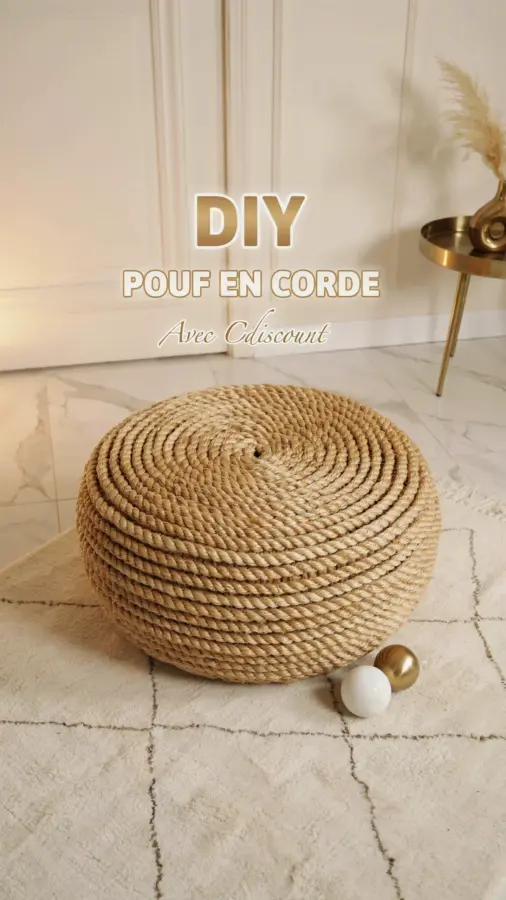
I didn’t take a before photo of the pile of noodles and tape sitting on my floor, so you’ll have to trust me on this rope pouf before and after. The ‘before’ was honestly embarrassing: seven pool noodles duct-taped into a cylinder that looked like a mutant pool float. The ‘after’ is a chunky natural fiber stool that my mom thought cost $200 at Pottery Barn. It didn’t. It cost me about $14 and one afternoon of my life.
Gather These Pool Noodle Pouf Supplies First
You need seven standard pool noodles. Not the thin ones, the thick ones. The kind that are about 2.5 inches around and make you feel like a kid again when you see them in the store. Go for the plain solid colors, because you’re going to cover them completely with rope anyway.
- 7 pool noodles
- Duct tape (the cheap silver kind works fine)
- Hot glue gun and a lot of glue sticks
- Jute rope, 6mm or thicker. I used about 100 feet.
- Scissors or a box cutter
That’s the whole list. No fancy tools, no woodworking skills. If you can wrap a present badly, you can make this.
Build the Base: Pool Noodle Pouf DIY Steps
Lay three noodles on the floor side by side. Tape them together at the top, middle, and bottom. Do the same with the other four noodles, but stack them differently. Honestly, I just taped them into a fat bundle and prayed it would hold. The exact arrangement matters less than you think.
Stand your bundle up and check if it wobbles. Mine did, so I added more tape around the bottom. Then I taped a flat piece of cardboard to the bottom just to give the rope something to grip. Some people make a round base out of cardboard, but I skipped that. The rope covers the mess anyway.
Here’s the thing: the base doesn’t need to be pretty. It needs to be solid. Spend time pushing the noodles together so there are no giant gaps. The tighter your bundle, the rounder your pouf will look.
How to Wrap a Pouf with Jute Rope Without Wanting to Quit
Start at the top center of the bundle. Put a dot of hot glue on the cardboard or the noodle surface, press the end of the rope into it, and start winding outward in a spiral. I went around and around, keeping the rope tight and close together. Every few wraps, I added a line of hot glue to hold it in place.
This part takes patience. Not gonna lie, my hand cramped after the first hour. But here’s the trick: don’t try to glue every inch of the rope. Glue in sections, like a stripe down the length of the pouf, then press the rope into it as you wind. That way you’re not burning your fingers every five seconds.
When you hit the bottom edge, you can fold the rope over and glue it underneath. Or just cut it and tuck it into a gap. Whatever. Nobody will inspect the underside unless they’re very weird.
Why This Pool Noodle Hack Works for Natural Fiber Decor
Natural fiber decor usually costs a fortune. I looked at seagrass poufs online and they were all over $150. This jute rope version gives you the same warm, textured look for a fraction of the price. The rope is the star, not the foam inside.
Jute has this rough, earthy feel that makes a room look cozier instantly. It’s not soft like a carpet. It’s more like a scratchy, satisfying hug for your feet. I put mine in a corner next to a potted plant and it made the whole space look intentional. Like I had planned it, which I absolutely had not.
(One mild complaint: jute sheds little fibers everywhere for the first few days. I vacuumed around it more than I expected. But it settled down quickly.)
The Honest Before and After of My Rope Pouf
Here’s the real rope pouf before and after moment. The ‘before’ looked like something a raccoon built. The ‘after’ looks like something you’d see in a catalog, but only if you get the wrapping right. I had a few spots where the rope bunched up and left gaps. I fixed those by lifting the rope gently and adding a little glue underneath.
My cat sat on the pouf while the glue was still warm. She immediately jumped off and gave me a dirty look. I think she was offended that the thing wasn’t edible. But once it cooled, she claimed it as her new napping spot. So that’s a good sign, right?
The transformation is genuinely wild. I almost didn’t recognize it when I was done. I kept staring at it like, ‘Wait, that started as pool noodles?’ Yes. Yes it did.
My Best Tips for an Easy Pouf That Actually Holds Up
Use thick rope. Skinny jute takes forever and looks stringy. You want a rope that’s at least 6mm so the wrapping goes faster and the texture looks chunky. Also, buy extra. I ran out with two rows left and had to use a different roll with a slightly different color. You can see the seam if you look closely. Don’t be like me.
Take breaks if your hands hurt. It’s a repetitive motion, and you don’t want to end up with a sore wrist for a day. I got up, made coffee, came back. The pouf doesn’t care.
And if you’re using this as a footrest, don’t expect a firm surface. Pool noodles are soft, so the pouf has a little give. That’s actually nice for propping your feet up. If you want something firmer, you can stuff the inside with old towels instead. But honestly, I like the squish.
I can’t stop looking at this thing, mostly because it’s proof that my ‘I’ll just make it myself’ impulse sometimes works out. The materials are cheap, the process is forgiving, and the result is a solid natural fiber stool that didn’t cost a fortune. I hope you make one too, and I really hope you take a proper before photo, because future you will want the evidence.
Leave a Comment