You don’t need a giant sofa to make your living room feel like the best spot in the house. Floor seating is having a real moment, and it’s not hard to see why. The idea of arranging a floor seating living room setup might sound like a big project, but honestly, it took me less than five minutes once I had the pieces in place. Good floor seating is about making a space feel intentional, not just throwing a bunch of pillows on the ground and hoping for the best.
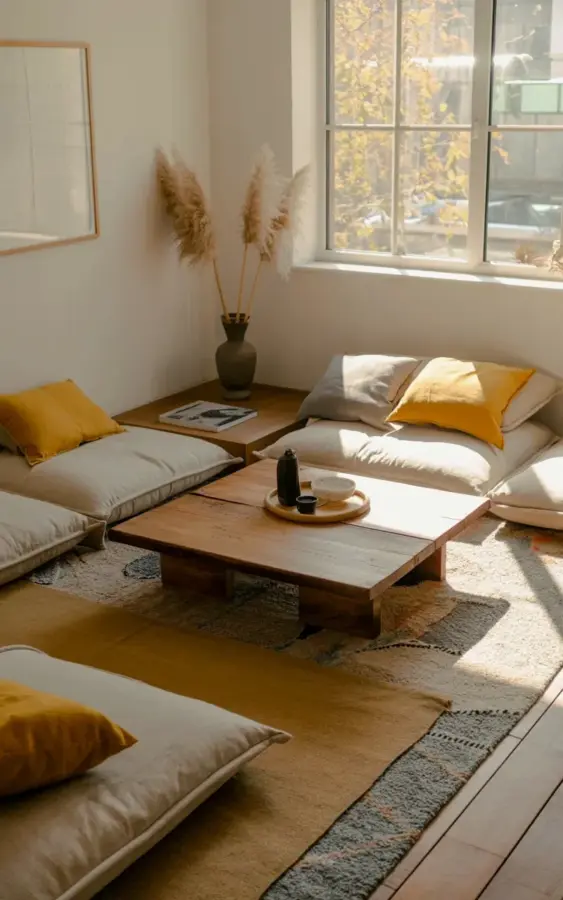
That photo everyone loves, the one with the cream linen cushions and the mustard yellow accents, is the perfect blueprint. It looks effortless because it is. You can copy that exact calm, cozy vibe in your own home, even if you’re starting from zero. All you need are a few key pieces and a simple layout plan that doesn’t require a degree in interior design.
Here’s how to pull it off, step by step, with the kind of honesty that comes from sitting on a hard floor for years before figuring out the secret. I’m not going to tell you to buy a million throw pillows. That’s a rookie mistake, and it makes the room look cluttered, not minimalist.
Why Floor Seating Works in a Minimalist Living Room
Minimalism isn’t about living in an empty white box, no matter what Instagram tells you. It’s about choosing pieces that serve a purpose and letting them breathe. A floor seating area does exactly that. It lowers the visual noise in the room because you’re not adding a massive piece of bulky furniture to the space. The room feels bigger because the eye line is lower, and the floor becomes part of the design rather than just a surface to walk on.
There’s also a physical freedom to it. When you sit on the floor, you tend to shift positions more, stretch out, or lean against a low table. It’r not formal. It’s the difference between a stiff waiting room and a friend’s house where you can actually relax. For parents, it’s also a genius move because it puts you at the same level as your kids, which changes the whole dynamic of playtime.
Ok so, the real reason I love it? Less stuff. That’s it. Honestly, it’s a practical way to furnish a space without the financial sting of buying a designer sofa that you’re terrified to spill coffee on. Floor cushions are forgiving. They don’t cost a fortune, and they don’t break when you move them around to chase the sunlight across the room for a midday nap.
Key Pieces You Need for a Low-Profile Lounge Setup
Before you start throwing things on the ground, you need a solid foundation. Not every cushion is created equal, and the wrong one will leave you with a numb leg and a bad attitude. The magic recipe for this specific look involves a few core components that all work together to create that “lived-in” but still tidy vibe.
First, you absolutely need a good area rug. The one in the photo is warm beige and gray, which ties the whole space together. That’s not an accident. A flat, cold floor is a dealbreaker. The rug defines the zone and adds a layer of softness under your bare feet. Go for something with a low pile, it’s easier to vacuum and won’t fight with the cushions for attention.
The main event, of course, is the floor cushions. Here is where you need to make a choice:
- Big floor cushions: Go large, around 25 inches square or bigger. These act as your “seats” and give you support.
- Floor pillows: Smaller and usually softer, these are for back support. You lean on them, hug them, or kick them out of the way.
- Traditional floor sofas: Some sets come with a backrest connected, but they are harder to store and look less relaxed.
I prefer the mix and match approach. You get more flexibility in layout, and you can wash the covers individually when someone accidentally spills a glass of red wine. (It happens. It has happened. I have scrubbed for hours.)
Arranging the Cushions in a Functional L-Shape
The L-shape is the gold standard for floor seating living room layouts because it creates conversation areas naturally. A straight line of pillows feels like a waiting room for a yoga class. An L-shape feels like a den. One leg of the L should be longer, that defines the main seating area for sofa-like lounging, while the shorter leg wraps around to create a cozy corner.
Look at the layout in the photo. The cream linen cushions line the wall in the L-configuration. This leaves the middle of the space open for the table. When you place the corner cushion at the bend of the L, you make the whole setup feel anchored. This isn’t just about looking pretty, it gives people a place to put their backs against a wall, which makes them feel secure.
Don’t obsess over getting the angles perfectly symmetrical. The beauty of floor seating is the casualness. Nudge a cushion slightly here, shift one a bit there. You want it to look like you just arranged it, not that you used a measuring tape and a level. Since you’re probably not a professional set designer, the goal is lived-in comfort. The wooden floor acts as the edge, and the rug holds the texture together. When you sit down, you should be able to put your coffee cup down without reaching too far.
Choosing the Right Low Wooden Coffee Table
Your coffee table is the operations hub of this whole setup. It’s where the drinks go, the books go, the remote lives, and where your feet rest when you’re lying down. But in a floor seating arrangement, standard height tables are awkward. You need something low. In the photo, it’s a large table made of rough-hewn planks. That texture adds warmth to the minimalist style. Minimalist doesn’t have to mean industrial metal and plastic.
Look for a table that sits around 15 to 17 inches tall. You should be able to reach it easily from the ground. A chunky table looks substantial, but it also hides crumbs and scuffs well, which is a practical advantage you’ll appreciate later. If you’re on a budget, a simple wooden pallet or a low plywood board with hairpin legs can work, but make sure you sand down any splinters first. You will brush your legs against it. It’s physics.
The table acts as the visual anchor of the room. Arranging floor seating around a central table creates that café-like vibe that makes guests go “oh, this is cool” before they’ve even sat down. If you want extra points, don’t put anything on top of the table. Let the wood be the statement. That’s minimalism 101, restraint.
Adding Throw Pillows for Color and Comfort
Now for the fun part, the details. The photo uses a very specific palette: cream, mustard yellow, and light gray. It’s a simple palette. You’re not doing rainbow chaos. The neutral base keeps it calm, and the mustard adds a pop of energy. You do not need ten different colors. Pick your accent color and stick to it.
When arranging sitting floor pillows for comfort, place the larger cream linen cushions down first. These are your base. Then lean the mustard yellow throw pillows against them, but don’t perfect the angle. Toss them, fluff them. The light gray pillow is usually placed in the corner or at the end of the L to break up the pattern and give the eye a place to rest. It’s a minimalist move to treat those pillows like punctuation rather than the main sentence.
Here is the thing about throw pillows; they are not just for decoration. Those mustard pillows are meant to be used. They should support your lower back when you’re sitting cross-legged. If you’re just looking at them and they are pristine, you’re doing it wrong. Use them, squish them, and then fluff them back up when you’re done. That’s the cycle of a cozy home.
Practical Tips for Keeping the Setup Clean and Comfy
Low furniture equals more exposure to dust and pet hair. That’s just a fact. The cream linen is beautiful, but it will show dirt. Buy cushions with removable covers that are machine washable. If you don’t, the whole routine becomes stressful instead of relaxing. I honestly didn’t check this on my first set, and I paid the price with bleach stains trying to spot clean a coffee spill. Learn from my mistake.
For the rug, rotate it seasonally if you can. It helps with even wear, which happens fast in a high-traffic floor seating area, especially if you have a dog who thinks the cushion is his bed. Vacuum the rug at least once a week. And don’t forget the space underneath the cushions, that’s where all the weird dust bunnies fly when you sit down.
Sitting on a hard floor can be tough at first. If you feel like you’re just a bag of bones, know that your body genuinely adapts. Start with shorter seating sessions and build up. Also, keep a couple of extra floor cushions tucked away in a closet for when you have more guests than expected. You can always pull them out to extend the L-shape.
Lighting matters more than you think. A floor lamp positioned near the corner of the L creates a warm glow that makes the floor area feel like an intentional room within a room. It’s a much better look than harsh overhead lighting, which tends to ruin every cozy ambiance it touches.
Making the Space Your Own Without Losing the Minimalist Feel
The photo is a blueprint, not a prison. You can swap the mustard for a dusty olive or a muted terracotta. If you hate yellow, don’t buy yellow. The only rule is to keep the overall palette grounded. You want one dominant neutral and one accent. That’s it. If you add too many colors, the minimalist label disappears and it just becomes clutter.
Add a low pile basket in the corner for extra blankets. That’s a functional piece of decor that doesn’t spoil the clean look. Maybe put a small plant, like a snake plant or a fiddle leaf fig, a few feet away to bring some life into the space. Plants in a minimalist room are like a fresh water source in a desert, they just make it feel better. But don’t cram anything else in. The floor space is meant to be a clean canvas.
You can also use this arrangement for a reading nook by adding a small side shelf for books. The beauty of the floor seating minimalist living room layout is that it’s modular. You can turn that L-shape into a U-shape if you have a lot of people over. Move the table slightly, shift the cushions, and you have a completely new layout without moving any heavy furniture.
Give yourself permission to change things up. That’s the whole point. You aren’t bolting anything to the ground. When the seasons change, swap the linen for something heavier. The minimalist principle isn’t about being rigid. It’s about being intentional with what you have. And what you have here is a comfortable, stylish, grounded way to live in your space.
So go ahead, push the sofa aside or sell it if you’re brave. Grab a few good cushions, find a low table, and surround yourself with a comfy spot that works for real life. Arrange it, sit in it, spill a little tea, and fluff it back up tomorrow. It may only take five minutes to set up, but it’s the type of corner you’ll actually use for years to come. Now go make your living room feel like a place you never want to leave. When you’re done, drop a picture of your new setup online and show us how it went, seeing how other people arrange their space is pretty much the best part of this whole design journey.
Leave a Comment