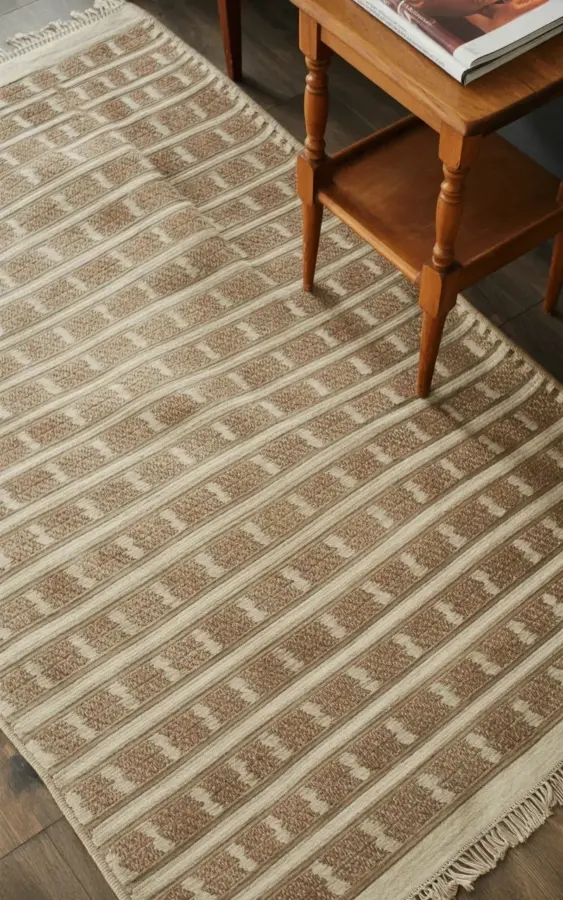
The plain beige carpet was driving me nuts. Every time I walked into the living room, it felt unfinished, like a room holding its breath. Then I unrolled this beige and brown geometric area rug, and honestly, the whole space exhaled. The diamond pattern, the warm brown bands, even the fringed edges, it all seemed to anchor the room in a way I didn’t expect.
This isn’t a sponsored post or some influencer hype. It’s just a practical account of what actually worked for us. If you’re staring at a blah floor right now and wondering whether a traditional rug can fix it, this little before and after tour will walk you through exactly how we did it.
Why We Switched to a Traditional Area Rug
Look, I used to think traditional rugs were only for formal dining rooms or grandmothers. I was wrong. The living room needed something with structure, and that’s where the classic diamond motif won me over.
A traditional area rug brings a kind of visual rhythm that a plain carpet just can’t match. The repeating horizontal bands of small diamond shapes draw your eye across the whole floor. Suddenly the room feels intentional, not accidental.
Also, and this is the practical part, a traditional rug hides wear really well. Our old carpet showed every footprint, every stray crumb. This beige and brown pattern? It just absorbs all that chaos.
Step 1: Measure Your Space Before You Even Browse
Ok so this sounds obvious, but I almost ignored it. I bought a rug once that was too small and it floated in the middle of the room like a sad little island. Not again.
Measure your seating area. The front legs of your sofa and chairs should sit on the rug. If you have a larger room, you can go bigger, but don’t just guess.
For our living room, the 8×10 size was the sweet spot. It gave enough floor around the edges to let the wood flooring breathe, but still felt substantial underfoot. Write your measurements down. Tape them to your laptop if you have to.
Step 2: Let the Rug Set the Room’s Color Story
Here’s the thing about a neutral rug with a strong pattern. It does half your decorating work for you.
Once the rug was down, I looked at the beige background and the warm brown diamonds. That gave me a palette. The wooden side table with the turned spindle in the photo, that was already there, but now it pops against the rug’s lighter beige tone.
I pulled out a couple of brown throw pillows and a woven basket that I had tucked away in a closet. None of it was new. The rug just made everything relate to each other.
If you’re feeling stuck with decor, lay the rug first and let it tell you what to do. It sounds almost too simple, but it works.
Step 3: Arrange Furniture to Frame the Pattern
We didn’t move any major furniture. Honestly, we just shifted things by a few inches and it made all the difference.
The diamond pattern has a natural symmetry. So we made sure the coffee table was centered on the rug, and the sofa’s front legs lined up with the edge of the rug, parallel to those horizontal bands.
One thing I didn’t expect. The fringe needs a little breathing room. You don’t want the sofa leg sitting directly on top of the fringe because it flattens it. Leave a small gap between the rug’s woven edge and the furniture leg.
Here’s a quick checklist we used:
– Center the coffee table on the rug’s middle motif
– Keep front legs on the rug, back legs off
– Leave fringe clear of furniture legs
– Angle a side chair slightly to break the rectangle shape
– Step back and take a photo to check the balance
That last one is weirdly helpful. A photo on your phone shows you things your eyes skip over.
The Before and After Difference Is Honestly Emotional
Before, the room was just a place to sit and watch TV. After, it feels like a room you want to read a book in or linger over coffee.
The fringed edges add that handcrafted touch. They soften the transition from rug to wood floor. And the visible textile texture, you can see it when you walk past, it makes the rug feel substantial, not like a flat printed mat.
My favorite before and after moment happened in the corner of the room. The wooden side table had always looked kind of ordinary against the plain beige floor. Now, tucked into the rug’s pattern, it looks like a styled vignette. I didn’t buy anything new for that corner.
I think the biggest lesson is that a living room rug doesn’t have to shout to transform a space. It just has to be the right size, the right pattern, and the right placement.
Step 4: Keep the Fringe and Pattern Looking Fresh
So let’s talk maintenance, because that fringed rug detail is gorgeous but it does need a little care.
Vacuum the fringe gently. Don’t use a beater bar on it, that just tangles the fibers. We use a handheld attachment on low suction.
If the fringe starts to curl or bend, you can iron it on low heat with a damp cloth. I know that sounds scary, but it works. Just don’t let the iron touch the main rug fabric.
For the beige and brown wool blend, we spot clean with a mild detergent and cold water. No harsh stuff. And we rotate the rug every six months so the traffic areas don’t fade unevenly.
One more tip. Use a rug pad underneath. It keeps the rug from sliding on the wood floor and it makes the whole thing feel cushier. We skipped it for the first week and the rug bunched up constantly. Total annoyance. The pad fixed it.
Would I Recommend This Look?
Yes. Not gonna lie, I was skeptical about a traditional rug in a casual living room. But the geometric pattern keeps it from feeling stuffy. The brown diamonds have a modern energy, even though the overall style is classic.
If you’re stuck somewhere between trendy and timeless, this kind of rug is a safe bet. It doesn’t scream any particular decade. It just works.
And honestly, the best part is walking in and seeing that diamond pattern every day. It’s like a quiet little reminder that small changes can completely reset a room. No paint, no new furniture, no demolition. Just a rug, a budget, and a couple of hours of rearranging.
If you’re thinking about trying a living room rug update, go measure your floor and grab a tape measure. Find something with a pattern you won’t hate in a year. Then move your furniture around like we did and see what happens. It might just surprise you.
Leave a Comment