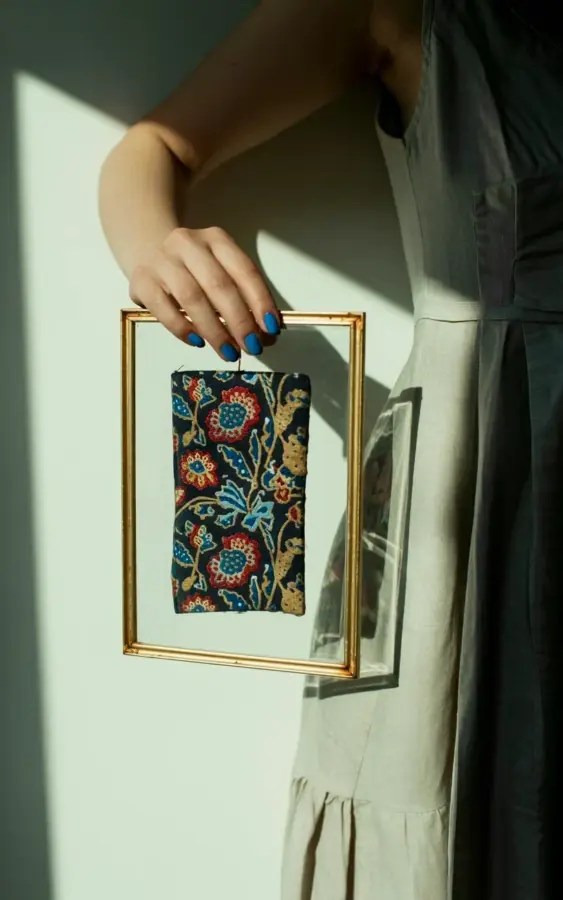
I snapped this photo of my own hand (yes, that blue nail polish is mine) holding a gold framed floral textile wall art piece against our white living room wall. The contrast between the dark navy fabric, the bright red and blue embroidery, and the warm gold frame caught my eye immediately. That little glass display case turned a simple handkerchief from my grandmother into something that feels museum worthy. If you have a treasured scrap of fabric or an embroidered cloth sitting in a drawer, this easy tapestry display idea might be exactly what you need to add warmth and personality to your home.
Why Frame a Textile Instead of Hanging It Loose
Loose tapestries are pretty, but they collect dust, wrinkle over time, and can fade unevenly. Framing your fabric under glass solves all of that. It keeps the colors vibrant and the fibers safe from sunlight and pets.
I have tried both methods. The framed piece stays clean for months, while the one I just pinned to the wall needed dusting every week. Framing also gives the fabric a polished, intentional look. It stops being a “scarf on the wall” and becomes a gold framed floral textile wall art piece that people actually stop and admire.
Choosing the Right Fabric for Your Framed Wall Tapestry
Not every fabric works well inside a frame. You want something with a clear pattern or strong embroidery that reads from a distance. The piece in my photo is a dark navy ground with stylized flowers in red, blue, and gold. That kind of contrast is ideal for a small frame.
Here is what to look for when you dig through your own fabric stash:
- High contrast colors: dark background with bright embroidery or print.
- Flat weave: thick velvet or brocade can be hard to press and fit under glass.
- Sentimental value: an old handkerchief, a piece of a wedding dress, a souvenir scarf.
- No heavy fringe or tassels: those stick out and make the glass sit crooked.
- Size that fits a ready made frame: 8×10 or 11×14 are common and cheap.
My grandmother’s floral embroidery was perfect because the stitches are dense and the navy background hides any small wrinkles. If your fabric is thin, you can back it with a scrap of white or black felt so the pattern pops more.
Finding a Gold Frame That Doesn’t Look Tacky
Gold frames can go very wrong very fast. You want something warm, not shiny brass or that fake yellow that reads as cheap. Look for frames labeled “antique gold” or “gilded” with a brushed or matte finish. The one I used is a simple gold glass display case, the kind you can buy at craft stores for under twenty dollars.
Check the depth of the frame before you buy. You need enough space for the fabric, possibly a backing board, and the glass to close flush. A standard shadow box style works best because it has a bit of room. If the glass presses directly on delicate embroidery, it can smash the threads flat. I like frames with a small gap or a mat that lifts the glass away from the textile.
Another tip: hold the frame up to your wall before committing. Gold looks different against white paint versus beige or gray. In my photo the wall is white, so the gold acts as a warm accent. Against a warm beige wall, a cool toned gold might clash.
Step by Step: How to Frame Your Own Floral Textile Art
This part is easier than you think. You do not need any special tools, just a steady hand and a bit of patience. Here is exactly what I did for my gold framed floral textile wall art display.
First, iron the fabric on a low heat setting. Use a pressing cloth if the embroidery is raised. You want the fabric completely flat, no creases. If the fabric is delicate, steam it instead of pressing directly.
Second, cut a piece of acid free foam board or mat board to fit the inside of your frame. This gives the fabric a flat, rigid backing. Lay the fabric on top and center the design. Fold any excess fabric around the back and tape it down with acid free tape. Do not use regular Scotch tape, it will yellow and stain over time.
Third, place the glass in the frame first, then the backed fabric, then the frame backing. Close all the tabs or screws. That is it. The whole process took me fifteen minutes once I had my materials ready.
I wore my light gray linen dress while doing this, which is why you see the sleeve in the photo. Totally unintentional, but it adds a soft texture that matches the linen backing I used inside the frame.
Displaying Your Gold Framed Textile Art to Maximum Effect
Where you put the piece makes a big difference. Because the colors are rich red, blue, and gold against dark navy, it works best against a light wall. White, pale gray, or cream lets the frame stand out. In my picture, you can see the shadow of my arm on the white wall. That shadow actually adds depth. Test your piece under different lighting to see if you like a soft shadow effect or prefer direct spotlight.
Hang it at eye level, not too high. This is not a massive tapestry you sit below. It is a framed artwork, so treat it like you would a painting. If you are grouping it with other pieces, give it a few inches of breathing room. Gold and navy are strong, they do not need competition.
I keep mine in the hallway where natural light hits it for about an hour each morning. The colors glow without being bleached out. Avoid direct afternoon sun, it will fade even the best dyes over time.
Styling Tips to Make Your Textile Art Feel Intentional
A single framed piece can look lonely. Pair it with a small vase of dried flowers on a shelf below, or lean it against a stack of books on a side table. The gold frame ties into warm metals elsewhere in the room, like lamp bases or drawer pulls.
If you have multiple fabrics you love, make a small gallery of them. Mix frame sizes but keep all the finishes the same gold tone. That creates cohesion without looking too matchy. I have seen people frame everything from antique doilies to vintage kimono silk. Each piece tells a different story.
Do not forget the sleeve or mat around the fabric. In my photo, the linen gray sleeve on my dress matches the soft gray mat I added inside the frame. That tiny detail makes the whole thing look custom and polished. Even a simple strip of neutral colored paper around the fabric can frame it within the frame.
Common Mistakes to Avoid When Framing Fabric
I made a few blunders before getting it right. First, I used a regular poster frame without a spacer, and the glass flattened the embroidery so much you could barely see the texture. Switch to a shadow box or add a mat spacer.
Second, I tried to frame a piece of silk that was too slippery. It shifted inside the frame after a week and I had to redo it. Now I pin the fabric to the backing board temporarily before taping. Use dressmaker pins, they leave tiny holes that are invisible in most weaves.
Third, I ignored the light. I hung a framed textile in a windowed nook and within six months the once vibrant red had turned rusty orange. Use UV protection glass or hang the piece out of direct sunlight.
Finally, do not rush the cleaning. If the fabric is old or dusty, gently pat it with a dry microfiber cloth. Never spray anything onto the textile. The glass will protect it after framing, but you want a clean starting point.
Why This Idea Works So Well for Renters and Apartment Dwellers
You may not be allowed to drill into walls for heavy tapestries or large hooks. A framed textile is light enough to hang with a single small nail or a command strip. The gold frame weighs very little, especially the glass ones with thin metal profiles.
It also gives you a reason to keep small pieces of fabric that hold memories without turning your space into a cluttered attic. One framed piece becomes a conversation starter. When I have guests over, they always ask about the floral embroidery. It tells a story without being fussy.
If you move, the frame packs easily in a tote bag and does not risk getting ripped like a full size tapestry would. I have moved three times with mine and it still looks perfect.
Save this decor idea for inspiration the next time you find a beautiful piece of fabric that deserves more than a drawer. Grab a gold frame, spend fifteen minutes, and turn that forgotten cloth into a grounded, warm focal point for any room.
#walltapestry #floralembroidery #goldframe #textileart #homedecorideas