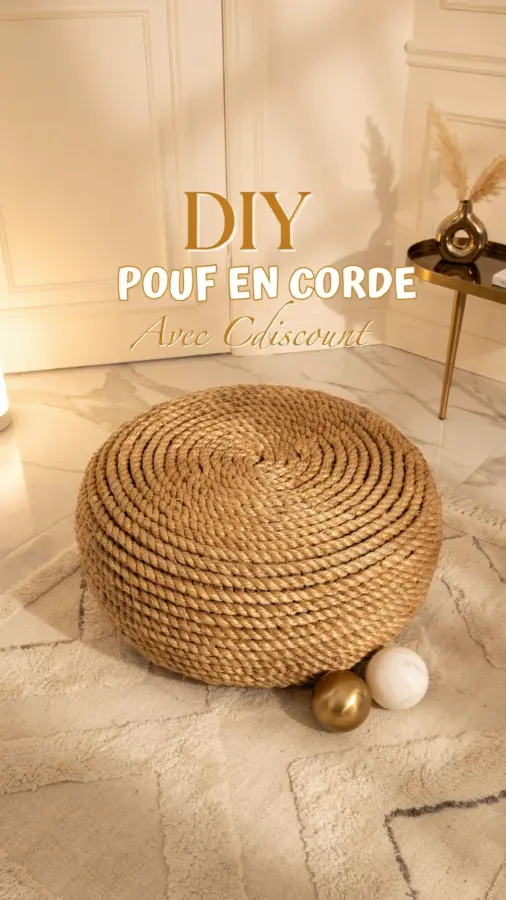
If you have ever tried making a DIY rope pouf only to end up with a lumpy, lopsided mess that unravels the second you sit on it, you are not alone. The idea is simple: pool noodles form the base, jute rope wraps around the outside, and you get a cheap natural fiber ottoman. But small mistakes in materials or technique can turn a quick afternoon project into a frustrating waste of supplies. I have made most of these errors myself, so let me walk you through the six most common pitfalls and exactly how to avoid them. By the end, you will have a sturdy, round pouf that looks like it cost three times as much.
Mistake #1: Choosing the Wrong Pool Noodle Size for Your Rope Pouf
The first trip to the dollar store seems easy: grab any pool noodle. But if you pick noodles that are too skinny (the thin foam tube kind) or too thick (the giant jumbo style), your pouf will be either floppy or oddly shaped. Standard pool noodles, about 2.5 inches in diameter, work best for a 12 to 14 inch tall ottoman. Thinner noodles collapse under the rope tension, and jumbo ones make the pouf look bulbous instead of neat. Measure the height you want, then cut the noodles to equal lengths. For a round base, you will need four to six noodle segments arranged like a star or a tight bundle. Stick with the standard, brightly colored foam noodles from any big box store.
Mistake #2: Skipping the Base Stabilization Step
Many tutorials tell you to just hot glue the pool noodles together and start wrapping. That is a recipe for a wobbly pouf that rocks every time someone sits down. The noodles are round, so they naturally want to roll apart. Before you add rope, cut a circle of cardboard or thin plywood roughly the same diameter as your planned pouf. Trace the outline of your noodle bundle, trim, and then hot glue the noodles firmly to that base. A layer of cardboard also prevents the jute from sagging into the gaps between noodles over time. Let the glue cool completely before moving to the next step. This ten minute addition saves you from endless frustration later.
Mistake #3: Using the Wrong Type of Jute Rope
Not all jute rope is created equal. Smooth, tightly twisted jute with a consistent diameter (6mm to 8mm) is ideal. Avoid the super thin kitchen twine or the rough, hairy rope sold for gardening. Thin rope takes forever to wrap and can snap under pressure. Hairy rope sheds tiny fibers everywhere and looks messy. Also check that the rope is 100% natural jute, not a poly blend. Natural jute accepts glue better and gives that warm, earthy texture you want for natural fiber decor. I recommend a 6mm twisted jute for a medium sized pouf, about 100 feet for a 12 inch diameter. Buy a little extra, because running out mid wrap is another common headache.
Mistake #4: Not Securing the Rope Ends Properly
The most frustrating moment is watching your finished pouf start to unravel because the starting or ending
#DIYropepouf #naturfiberdecor #DIYottoman #homedecorDIY #ropepouf