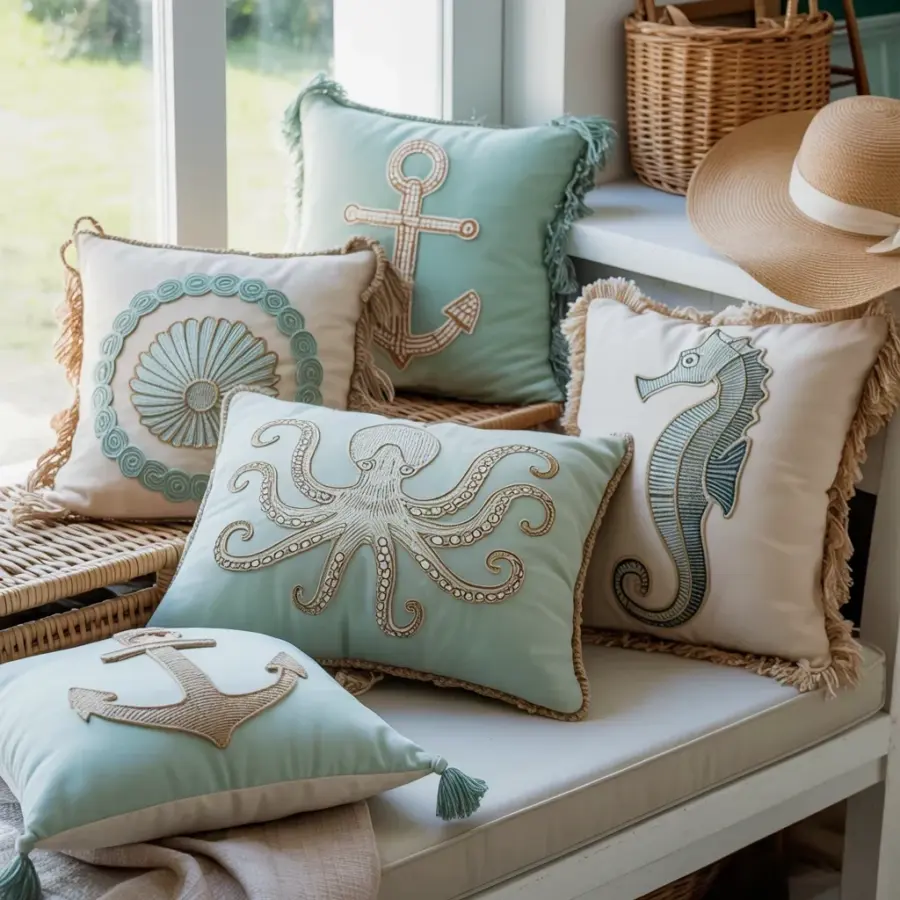
I learned the hard way that a coastal bedroom can quickly turn into a theme park gift shop. When I first decorated my beach house, I loaded up on anchors, fishnets, and starfish. It felt more like a souvenir stand than a relaxing retreat. The biggest mistake? Overdoing the nautical theme with natural touches that ended up looking like an afterthought. After a brutal rethink, I found a better way: blending raw textures like jute and linen with subtle art deco details for a layered, sophisticated look that actually feels like the coast.
Why too many anchors and seashells kill the calm
Those tiny shell garlands and rope-wrapped mirrors might seem harmless. But stack enough of them together and your bedroom starts to scream “I bought this at a pier shop.” Natural touches should feel organic, not staged.
I once had a wicker basket filled with driftwood, a shell lamp, and a seashell-print duvet. It was chaos. The room had no breathing room. The coastal bedroom mistake is treating every surface as a display case for ocean souvenirs. Instead, choose two or three natural elements and let them carry the weight.
A simple rule I now follow: if an object looks like it could be sold at a beachfront souvenir store, leave it out. That includes those tiny ceramic sailboats and the “Live, Laugh, Beach” signs.
Natural textures that add depth without the kitsch
Jute, linen, and raw wood are your best friends. They bring the outside in without shouting “look at me, I’m beachy.” My go-to is a jute rug layered under a linen duvet. The roughness of the jute contrasts perfectly with the soft, crumpled linen.
- Jute rugs: Go for a natural undyed tone. They hide sand and clean up with a quick shake.
- Linen curtains: Hang them high and wide. The gentle wrinkles mimic the movement of waves.
- Raw wood furniture: A mango wood nightstand or a teak stool adds warmth without looking like driftwood that washed ashore.
- Cotton quilts: Choose a creamy white or soft oatmeal for the bed. It feels like a cozy summer morning.
These textures work because they are neutral and tactile. They don’t need shells or starfish to feel coastal. Your eye reads them as natural and relaxed, which is exactly the vibe you want.
Subtle art deco accents: the unexpected twist
This is where things get interesting. After ditching the nautical clutter, I felt the room was too plain. That is when a friend suggested art deco elements. At first I thought it would clash with the beachy feel. But the opposite happened.
Think sleek brass lines, geometric patterns, and soft velvet. A small art deco mirror with a fan shape or a brass lamp with a fluted shade adds a touch of glamour that lifts the whole room. It breaks the monotony of all that natural fiber.
I added a pair of nightstands with a subtle deco-inspired curved front and brass handles. That tiny gold accent made the jute rug and linen look intentional, not accidental. The contrast is what creates that chic, layered look you see in the best coastal design magazines.
How to balance natural and art deco without going overboard
The trick is proportion. You want 70% natural textures and 30% art deco accents. Too much brass and velvet will turn your bedroom into a hotel lobby. Too little and the room feels unfinished.
Start with the natural base: a jute rug, linen bedding, and a wooden bed frame. Then add one or two deco pieces. My personal setup includes a brass curved floor lamp and a small round mirror with a rippled edge. That is it.
Also pay attention to color. Keep the palette light and sandy: cream, beige, soft blue-gray, and a touch of dusty rose. The brass or gold in the art deco accents should be the only shimmer. That keeps the room from feeling too dressed up.
The lighting trick that sells the whole look
Lighting can make or break this blend of styles. Nautical themes often use harsh, direct light (think bare bulbs over ship wheels). Instead, go for soft, diffused glow. I use a linen drum shade on a brass base and a couple of warm LED bulbs.
For the art deco side, a small glass pendant with a frosted globe adds a hint of 1920s elegance without being heavy. The light bounces off the brass and makes the jute rug look warmer. It is a simple change that instantly upgraded my room.
Always avoid blue-tinted bulbs. They make natural textures look cold and uninviting. Stick with 2700K to 3000K for that golden coastal sunset feel.
Common mistakes even pros make (and how to avoid them)
Even when you know the rules, it is easy to slip. I once bought a beautiful shell-shaped soap dish because it was “just one piece.” A week later I had a shell-shaped candle holder, a shell coasters set, and a shell mirror. It snowballs fast.
Here are the pitfalls I watch out for now:
- Mixing too many natural finishes: Stick to one wood tone (I use medium teak) and one rattan piece maximum. Too many textures become visual noise.
- Forgetting the ceiling: A plain white ceiling can make the room feel flat. I added a subtle wallpaper border with a geometric deco pattern in pale blue. It ties the room together without shouting.
- Overaccessorizing: A coastal bedroom should have breathing room. Leave at least 30% of surfaces empty. Negative space is your friend.
- Ignoring scale: A tiny jute rug lost in a large room looks like a postage stamp. Go bigger than you think. My 8×10 jute rug anchors the whole space.
I also learned to avoid matching furniture sets. A matching bed, nightstands, and dresser in a coastal theme look like a showroom. Mix in a vintage find, like a rattan chair or a wooden bench, to keep the room feeling collected over time.
My final go-to checklist for a fresh coastal bedroom
If you are starting from scratch or doing a refresh, here is the quick roadmap I use now. It keeps me from falling back into the souvenir shop trap.
- Base layer: Jute or sisal rug, linen or cotton bedding in off-white, wooden bed frame (no carved shells).
- Texture layer: One chunky knit throw, two linen pillows, a woven basket for storage.
- Accent layer: One brass or gold lamp, one geometric mirror, one art deco print (think abstract fan or chevron pattern in muted tones).
- Finishing touch: A single piece of driftwood on a nightstand or a small seashell on a stack of books. That is it. One natural oddity, not a collection.
That formula gives you a room that feels like a calm coastal escape, not a nautical museum. It is personal, layered, and actually relaxing to sleep in. And it still has enough personality to show your love for the shore.
Give this approach a try the next time you feel that urge to grab another anchor pillow. Your bedroom will thank you, and your guests will actually compliment your taste rather than asking where you bought the life preserver.
#CoastalBedroom #NaturalDecor #ArtDecoStyle #BedroomDesign #BeachHouseStyle