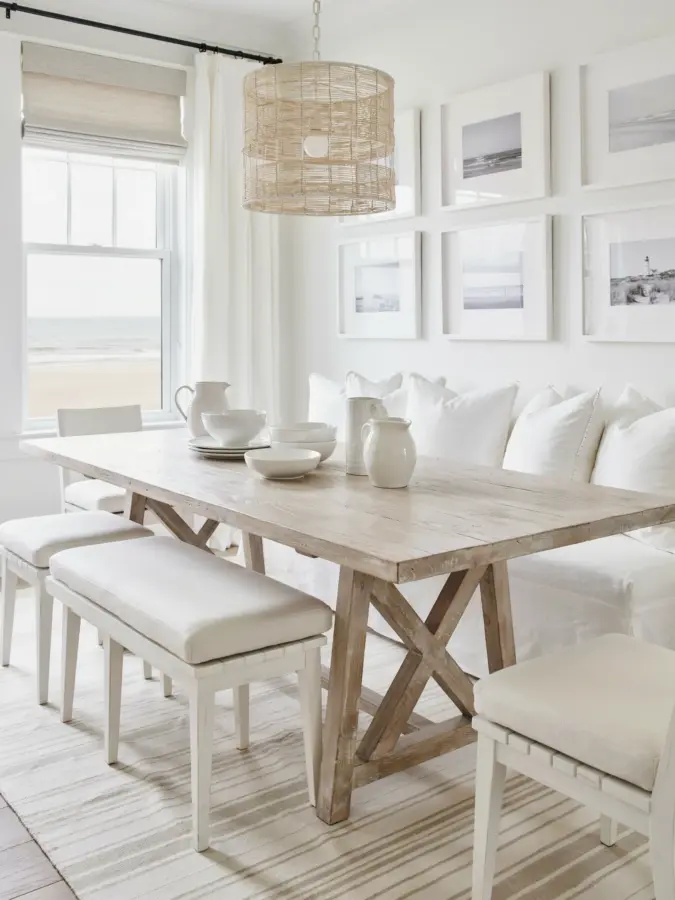
If you have been looking for a simple way to bring organic warmth to your coastal home dining table, a jute runner is the answer. I have styled dozens of tables for friends and family, and nothing else creates that effortless beach house feel quite like natural jute. It is humble, textured, and instantly grounds a setting without trying too hard. Today I will walk you through the exact steps to layer a jute runner with linen napkins and seagrass chargers, then show you how to finish the look with driftwood and white ceramics. This is a practical how to guide, not just inspiration.
Why Jute Runners Are a Coastal Home Decor Must Have
Jute runners bring a tactile, earthy element that synthetic fabrics simply cannot replicate. The rough weave catches light differently than cotton or polyester, and that natural golden brown color works perfectly with a coastal home decor palette of whites, blues, and sandy neutrals. I have used jute runners in my own dining room for years, and they somehow make every meal feel a little more relaxed and connected to the outdoors.
Another reason jute is such a smart pick for table styling is its durability. Unlike delicate lace or linen that stains easily, jute can handle a bit of sand from the beach or a splash of coffee. It is a workhorse fabric that still looks beautiful. If you are aiming for that specific beach house style where comfort meets simplicity, a jute runner is your starting point.
How to Layer a Jute Runner with Linen Napkins and Seagrass Chargers
Layering natural textures is where the real magic happens. Start by placing your jute runner down the center of the table. Let it hang a few inches over each end, but keep it straight and simple. Then add your seagrass chargers at each place setting. The seagrass has a tighter weave and a slightly different shade of tan, which creates subtle contrast without clashing.
Next, fold a linen napkin into a simple rectangle or a loose knot and set it on top of the seagrass charger. The linen adds a soft, airy feel that balances the ruggedness of the jute. For an extra coastal touch, tuck a small piece of dried palm or a seashell under the napkin. Here is a quick checklist for that layered look:
- One jute runner down the center line of the table
- Seagrass chargers at each seat, centered on the runner
- Linen napkins in white, cream, or pale blue
- Optional: a tiny starfish or piece of driftwood on each napkin
- Simple white ceramic plates on top of the chargers
This combination uses natural textures in a way that feels curated but not fussy. You do not need expensive accessories, just a few honest materials.
Choosing the Right Size Jute Runner for Your Table
Getting the size right matters more than you might think. A jute runner that is too short looks like an afterthought, while one that is too long overwhelms the table. For a standard six person rectangular table, I recommend a runner that is about 36 to 40 inches long, measured after the overhang. That usually means a 72 inch runner if you want 16 inches of drop on each end. Measure your table length, subtract the space you want for place settings, and add 12 to 16 inches for the overhang.
For round tables, a jute runner can work too, but you may want to consider a round jute placemat instead. Some people worry that jute runners shed or have a strong smell when new. A quick note: let the runner air out for a day before using it, and give it a gentle shake outside to remove loose fibers. That little step makes a big difference in keeping your table styling clean.
Pairing Driftwood and White Ceramics with Your Jute Runner
Driftwood and white ceramics are the perfect partners for a jute
#juterunners #coastalhomedecor #naturaltextures #beachhousestyle #tablestyling
Leave a Comment